Noonday lessons

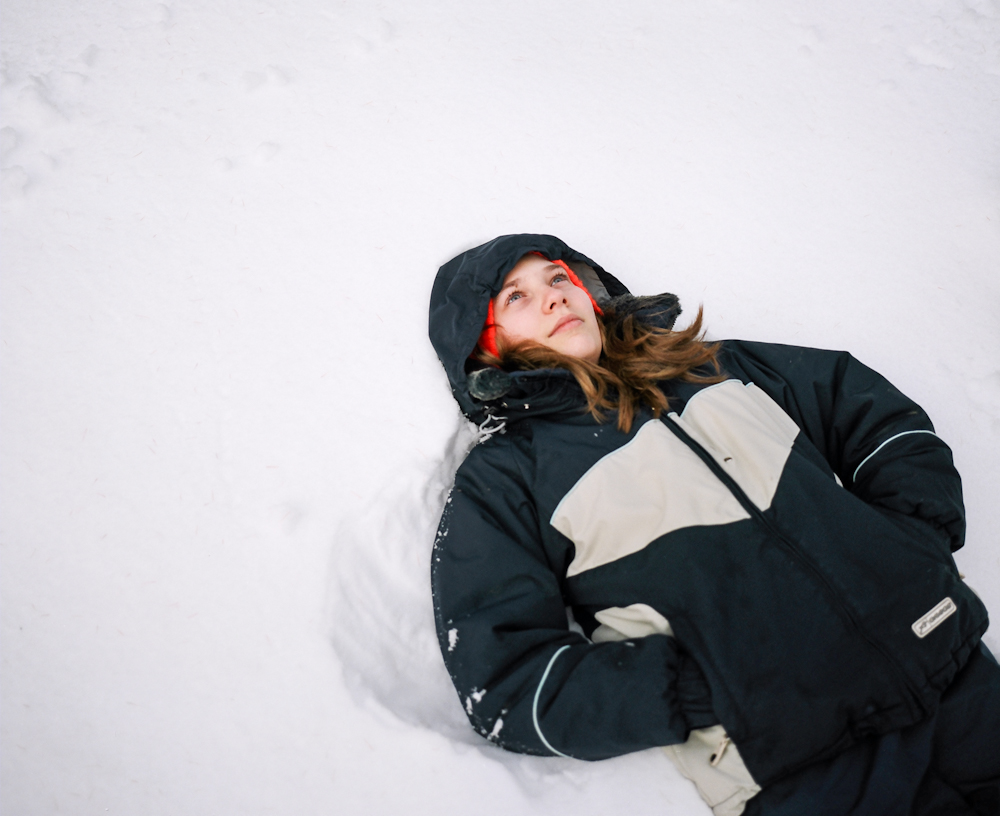
I don't generally like to shoot in the middle of the day, as the cameras I use have a pretty limited dynamic range.  But every once in a while I make an exception. On this particular day, the sky was so clear and the colors so rich I just couldn't resist bringing along the camera. It was a bit of a calculated risk -- and also an adventure: we were going someplace we'd never been before, although not that far from home. And, as you can see here, my camera did a surprisingly good job of stepping up to the demands of the mid-day light.

I think we often tend to underestimate our own dynamic range capacity as well, resisting both the highs and lows life has to offer for fear we won't be able to handle the voltage -- or the pain. And yes -- sometimes that can be very difficult. But I think we were designed to handle far more than we generally give ourselves credit for. There are for us, as for my camera, calculated risks: moments when we might be stepping out of our comfort zone, but all the signs tell us the potential for joy and success is great if only we are willing to try.

So I like to think of images like this as noonday lessons: reminders that sometimes a departure from familiar patterns and places can bring new clarity, and even peace. But we'll never know for sure unless we're willing to take that risk...

There's beauty in the mystery

One of the hazards of being a photographer is that you notice the oddest things; art is everywhere.  This, for example, is a reflection in the door of our local coffee shop.  The shadow of the barista is inside; the garden that shares the building is outside shining in from behind him, and there is a taxi waiting outside the door.

I've learned from experience that pictures like this are not generally the pictures that sell: most people prefer to hang something on their walls that's either obviously and boldly abstract or else instantly recognizable. 

I'm not quite certain why that would be true, but I suspect it's another version of a phenomenon we learned about in a workshop we took a few weeks ago on social learning disorders.  And that is that children who are less obviously disabled are more likely to be bullied than either "normal" children or more obviously disabled children. It seems that we get more uncomfortable -- even fearful -- around things and people we can't easily categorize.  We humans tend to prefer to keep things in boxes, predictable, controllable. 

And, knowing that, we tend to want to control what is seen at first glance, to protect that which is different and unique in us from the prying eyes of the bully.  The masking behaviors we all indulge in --the clothes, the hair, the language, the gestures, the makeup (if you wear it)-- are all designed to control that first impression. "See?" say the masking behaviors, "I'm normal, predictable.  You don't need to bully me; I'm just like you." 

Perhaps the purpose of art is to reverse that process, to invite the viewer to stop, to look behind the surface, to see that there is more to the picture -- and so much more to life -- than what is immediately apparent. I'd like to think that when we take the time to look more deeply we'll discover the beauty that wells up out of mystery, and will find it resonates with the mystery which lies within each of us.  Perhaps a few experiences of that will help to lessen our fear of that unpredictable other-ness.

Defects as opportunities

"A tailor needs a torn garment
to practice his expertise.
The trunks of trees
must be cut and cut again,
so they can be used for fine carpentry.
Your doctor must have a broken leg to mend.

Your defects are each opportunities
for glory to be manifested.
Whoever sees clearly
what is diseased in himself
begins to gallop on the way.
There is nothing worse
than thinking you are well enough.
More than anything,
self-complacency blocks the workmanship."

-- Rumi

Rafael Goldchain

I discovered Rafael Goldchain's wonderful self-portraits in a recent Lenswork Magazine. Rafael is a Chilean-Canadian Jewish artist, who was born in Santiago de Chile, lived in Jerusalem in the early 1970s, and moved to Canada in the late 1970s. He has created an amazing series of photographs bases on memories, family and fiction, which was published in 2008 by Princeton Architectural Press.

Rafael received a MFA from York University and a Bachelor of Applied Arts from Ryerson University, both in Toronto. He has garnered numerous awards including the Duke and Duchess of York Prize in Photography from The Canada Council for the Arts. His photographs have been exhibited across Canada, Chile, the United States, Cuba, Germany, Italy, the Czech Republic, and Mexico. His work is featured in many private and public collections including the Bibliothèque Nationale in Paris, the Canadian Museum of Contemporary Photography in Ottawa, the Museum of Modern Art in New York, the Museum of Fine Arts in Houston, the Portland Art Museum, and the Museum of Photographic Arts in San Diego. Goldchain is currently Professor and Program Coordinator of the Bachelor of Applied Arts - Photography at Sheridan Institute of Technology and Advanced Learning in Oakville, Ontario, Canada.


 I Am My Family is an autobiographical exhibition that features digitally altered self-portrait photographs. It suggests that grounding an identity within a familial and cultural history that has been subject to erasure, geographic displacement, and cultural dislocation involves a process of gathering and connecting scattered fragments of past familial history while at the same time acknowledging the impossibility of complete retrieval. 


The self-portraits in I Am My Family are detailed reenactments of ancestral figures that can be thought of as acts of “naming” linked to mourning and remembrance. I Am My Family proposes a language of mourning through self-portraiture and through the conventions of family portrait photography. In reenacting ancestors through a relationship of genetic resemblance, and through the conventions of the portrait photograph, the self-portraits in I Am My Family suggest that we look at family photographs in order to recognize ourselves in the photographic trace left by the ancestral other.


I Am My Family is the product of a process that started several years ago when my son was born. I slowly realized that my role as parent included the responsibility to pass on to my son a familial and cultural inheritance, and that such inheritance would need to be gathered and delivered gradually in a manner appropriate to his age. My attempts at historical story-telling, cultural and familial, public and private, made me acutely aware of how much I knew of the former, and how little of the latter. I thought of the many erasures that family history is subject to, and of the way in which my South American and Jewish educations privileged public histories. As I reached my middle years it became important to not only retrieve basic historical facts such as family names, dates, and genealogical relations, but also to reach towards the world of my ancestors as a basic foundation of an identity that I could pass on to my son. While I could access the considerable existing stores of knowledge of Eastern European Jewish life, knowledge of the pre-Holocaust lives of my grandparents and their families only exists in fragments deeply buried within the memories of elderly relatives.


I Am My Family explores the relations amongst family portraiture, mourning and remembrance, notions of history, memory, and of justice and inheritance. Just as I am the carrier of memories and ancestral history fragments through whom the familial past is brought up into the present (for my son to carry into the future), the self-portraits in I Am My Family visually articulate a process of identity representation through which ancestral figures take on my likeness as they become visible (while at the same time remaining concealed behind my features and behind the conventions of the portrait photograph) to serve as a reminder of the unavoidable work of inheritance. These images are the result of a reconstructive process that acknowledges its own limitations in that the construction of an image of the past unavoidably involves a mixture of fragmented memory, artifice, and invention, and that this mixture necessarily evolves as it is transmitted from generation to generation.


Time for reflection

There's a boat show next summer that I'm preparing for, and I tend to take my best boat pictures on those rare foggy mornings that happen in late September and early October, so I try to go down to the docks with my camera whenever there's a fog. 

Unfortunately I slept late yesterday morning, so when I woke to discover a glorious thick fog obscuring the horizon I had to choose between meditation or going out with my camera: missing my Pilates class at 9 was really not an option. 

So I elected to compromise: I said yes to meditation, but left ten minutes early for class and went the long way, down by Manitou Beach, to see if I could at least get a picture of the pilings there.

I was disappointed when I drove by to see there were no cormorants on the pilings, but I stopped anyway and got out of the car with my camera, and while I was walking back to get the picture this one beautiful bird landed and kindly stretched his wings for me.

I did get a photo with a boat drifting lazily in the background -- possibly usable for the show.  But this one was my favorite.  And I have no regrets about having chosen to meditate.  As Garry Wills says, "A very original man must shape his life, make a schedule that allows him to reflect, and study, and create."  I do believe that if I keep my priorities straight, and keep making space for that quiet time at the beginning of the day, there will still be time for whatever needs to be done -- and, who knows? Perhaps the results will be more effective if I bring a more centered self to the task.

Alexi Hobbs

Some photographers are born story tellers.  They make work that feels like a visit with an old friend, or a relative who is sharing memories of a life lived--a scrapbook of images that tell our stories.  Alexi Hobbs is one of those photographers. He has the gift of the narrative and brings us along on his insightful explorations of place and family.  His project, Hunters and Heirs, looks at family traditions and shared experiences that stem from a time of need, not want.

Alexi is a fine-art and editorial photographer from Montreal. He has shot editorial work for publications such as Time, Monocle, Dwell, enRoute and Afar. His prints have been fortunate enough to have graced the walls of galleries in Canada, the United States and even a museum in Russia. Most recently he has been selected as a winner of the Magenta Foundation's 2012 Flash Forward Emerging Photographers competition.

Hunters and Heirs: In 1941, my grandfather, Antonio 'Pit' Allard deserted the army to avoid fighting in World War II. He spent four years in hiding on the Gaspesian peninsula and four winters isolated in the forest, working alone as a lumberjack, living off beans and lard. He broke the monotony by trapping hare and shooting partridges. This was a time when hunting was a means to a very vital end, not a weekend hobby. It was a way of life and a source of food.  
When the war ended, Pit settled down in the city, started a family and moved on. However, he never gave up hunting. It reminds him of who he is, where he comes from and why he is still here today.
My grandfather is known for his storytelling. His stories, based both in historical fact and myth, have become part of our family's identity. They tell of time spent in the wild and many of them find their origin in these hunting trips. In October of 2009, I followed him into the woods, not only to document part of my family's history, as a photographer, but also to become part of it by actively participating in what would undoubtedly be added to the library of folktales, recounted at the next family gathering. I went to document my family during this transition and to remember who we are, where we come from and ultimately, the reason we are all here. 


A Basket of Fresh Bread

A Basket of Fresh Bread  

There is a basket of fresh bread
on your head,
yet you go door to door
asking for crusts.
Knock on the inner door; no other.

Sloshing knee-deep
in clear streamwater,
you keep wanting a drink
from other people's waterbags...

Do not look for it outside yourself:
there is a fountain within.

-- Rumi
Copyright © visionprimordial. All Rights Reserved.
Blogger Template designed by Click Bank Engine.